


The World’s Oldest Cafés Worth Sitting In
There are cafés you visit for caffeine, and cafés you enter for continuity.
In an era trained to praise the new, it’s worth saying plainly: age deserves admiration. Not as nostalgia, but as evidence—of resilience, relevance, and care. These places have endured shifting tastes, political weather, economic cycles, and the slow erosion of attention. To remain open for a century—or three—isn’t an accident. It is maintenance. It is adaptation. It is a daily commitment to keep mattering.
At ConsiderBeyond, we’re drawn to cafés that reward stillness—not because they are preserved, but because they are lived in. Their value isn’t just historical; it’s human. They never stopped hosting life: conversations that stretch, books that stay open, debates that soften into laughter, quiet moments of watching a city move.
This is not a checklist. It is a collection of rooms worth inhabiting.
01. Café Majestic
Porto (born 1921)
Address: R. de Santa Catarina 112, 4000-442 Porto, Portugal (Google Map)
On Rua de Santa Catarina, Café Majestic stands as Porto’s most elegant pause. The Belle Époque façade opens into a mirrored interior that feels closer to a salon than a café—ornate, but never loud.
What’s remarkable is not only its beauty, but its ability to stay dignified through time. Majestic hasn’t rushed to modernize itself into trendiness; it has simply remained consistent, and by doing so, current.
Why: Belle Époque elegance that still feels human.
Order: Espresso + pastry.

02. Caffè Pedrocchi
Padova (born 1831)
Address: Via VIII Febbraio 15, 35122 Padova PD, Italy (Google Map)
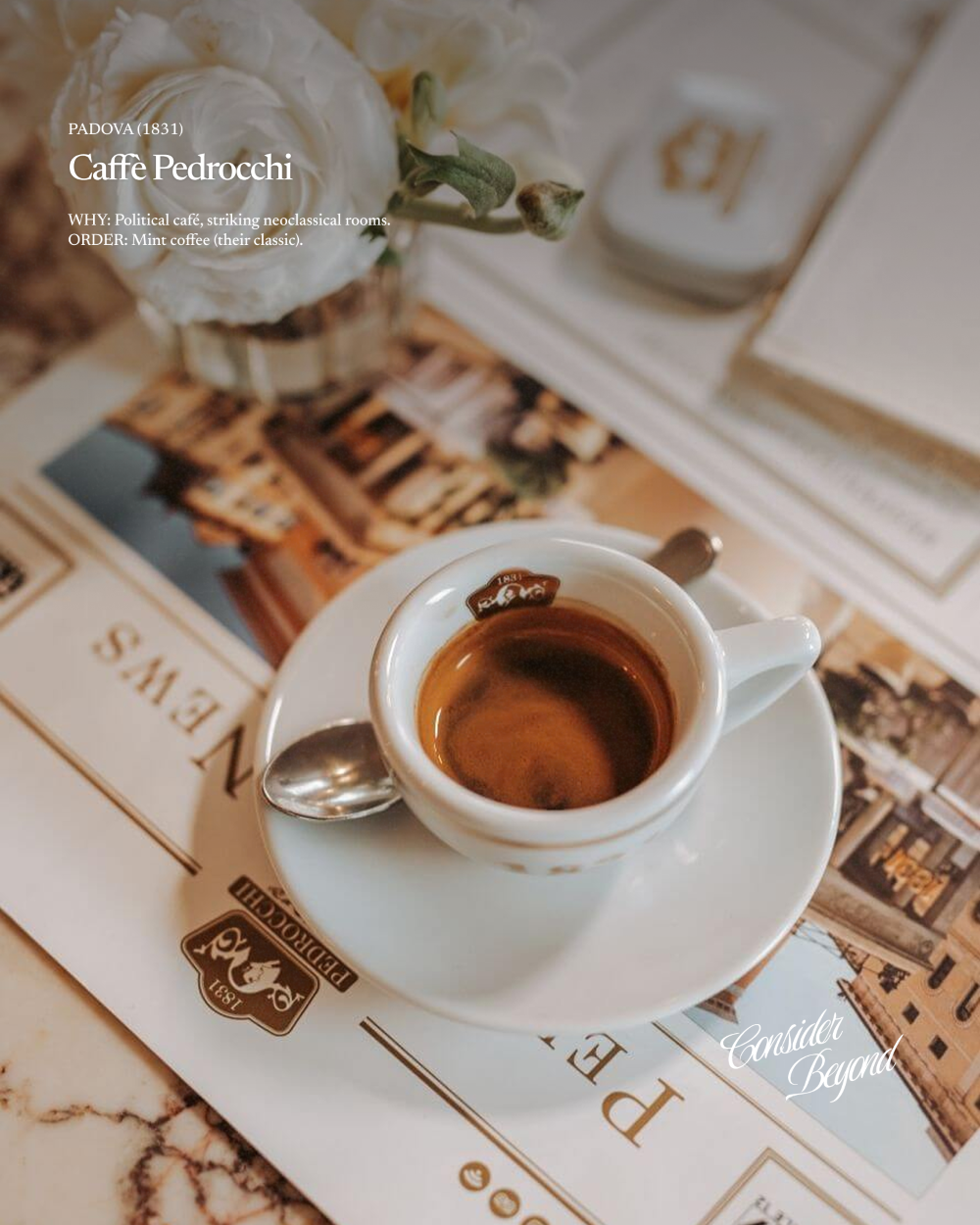
Part café, part civic institution, Caffè Pedrocchi was once known as “the café without doors”—a space open to thinkers, students, and political life. Its neoclassical rooms are striking, but the atmosphere is intellectual rather than precious.
Pedrocchi’s durability comes from its openness: a café that remained relevant because it remained public.
Why: Political café energy in grand rooms.
Order: Mint coffee (their classic).
03. Les Deux Magots
Paris (1885)
Address: 6 Pl. Saint-Germain des Prés, 75006 Paris, France (Google Map)
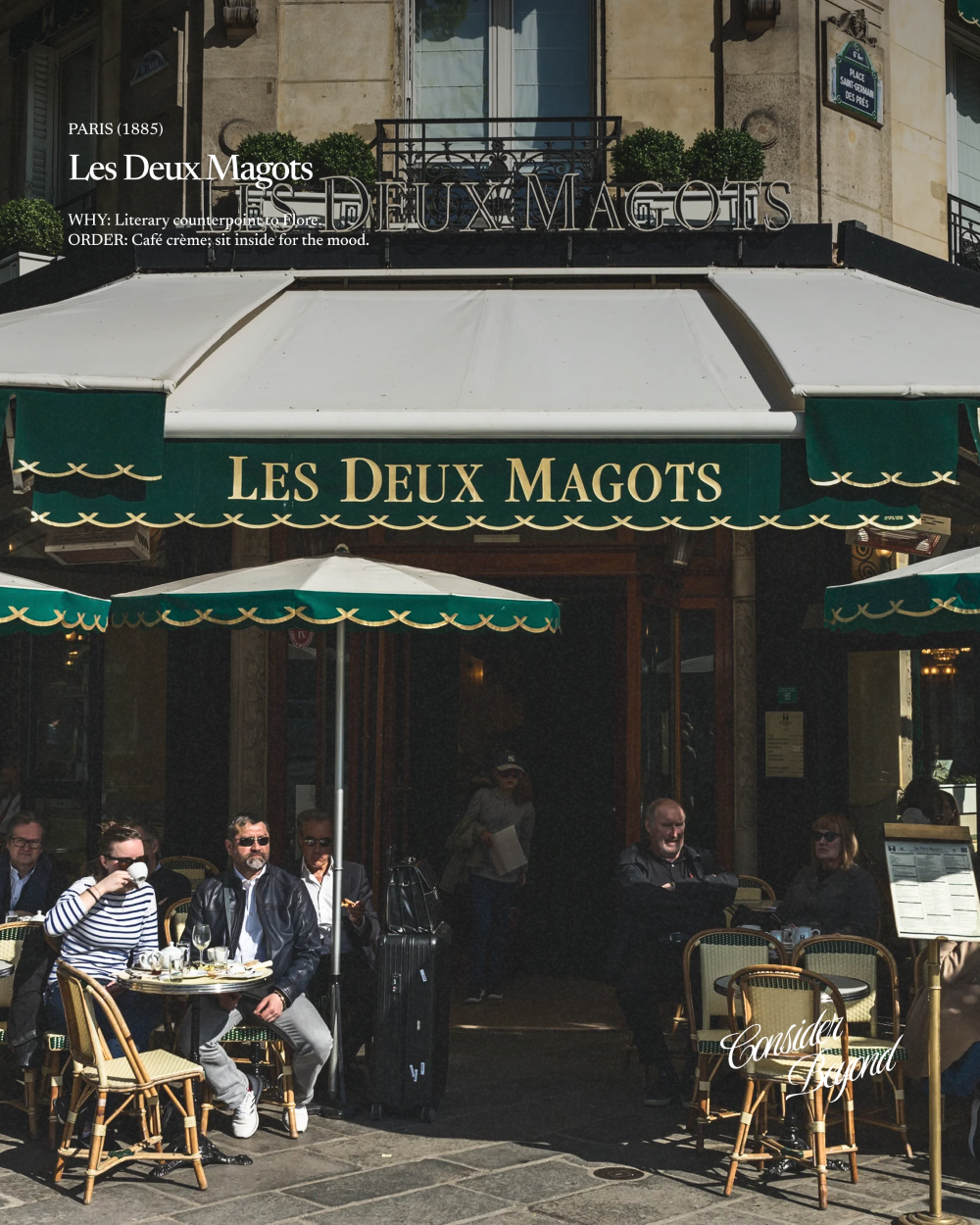
Often mentioned beside Café de Flore, Les Deux Magots feels quieter, sharper, more deliberate. The room carries a seriousness—wood, mirrors, a slightly formal hush—that makes it ideal for reading or thinking without performance.
This is the kind of place that survives fame by refusing to become a stage.
Why: Literary counterpoint to Flore.
Order: Café crème; sit inside for the mood.
04. Café Odeon
Zurich (born 1911)
Address: Limmatquai 2, 8001 Zürich, Switzerland (Google Map)
At Café Odeon, locals still linger—and that alone feels rare. Once frequented by writers and thinkers, Odeon today holds a steady hum: newspapers, quiet conversations, a rhythm that doesn’t apologize for taking time.
It doesn’t trade on history; it simply continues as a working café.
Why: Intellectual crossroads where locals still stay.
Order: Coffee or afternoon aperitif.

05. Caffè Gilli
Florence (born 1733)
Address: Via Roma, 1r, 50123 Firenze FI, Italy (Google Map)
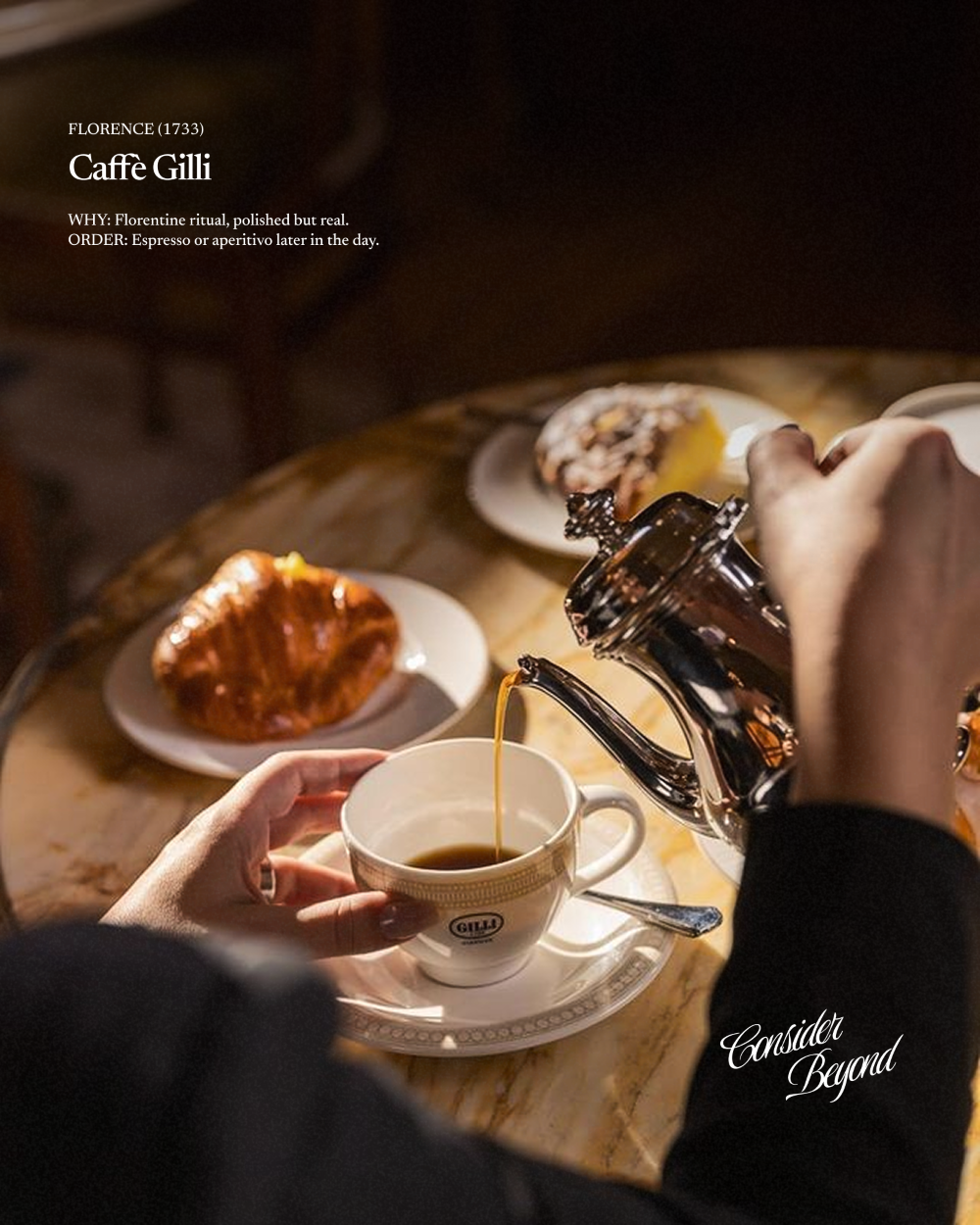
Caffè Gilli sits on Piazza della Repubblica with quiet confidence—polished, but real. Florentine life passes through it naturally: espresso in the day, aperitivo as the city softens into evening.
Gilli’s continuity is ritual made visible: a place that endures because it honors rhythm.
Why: Florentine ritual, refined but lived-in.
Order: Espresso or aperitivo later in the day.
06. Café Central
Vienna (born 1876)
Address: Herrengasse 14, 1010 Wien, Austria (Google Map)
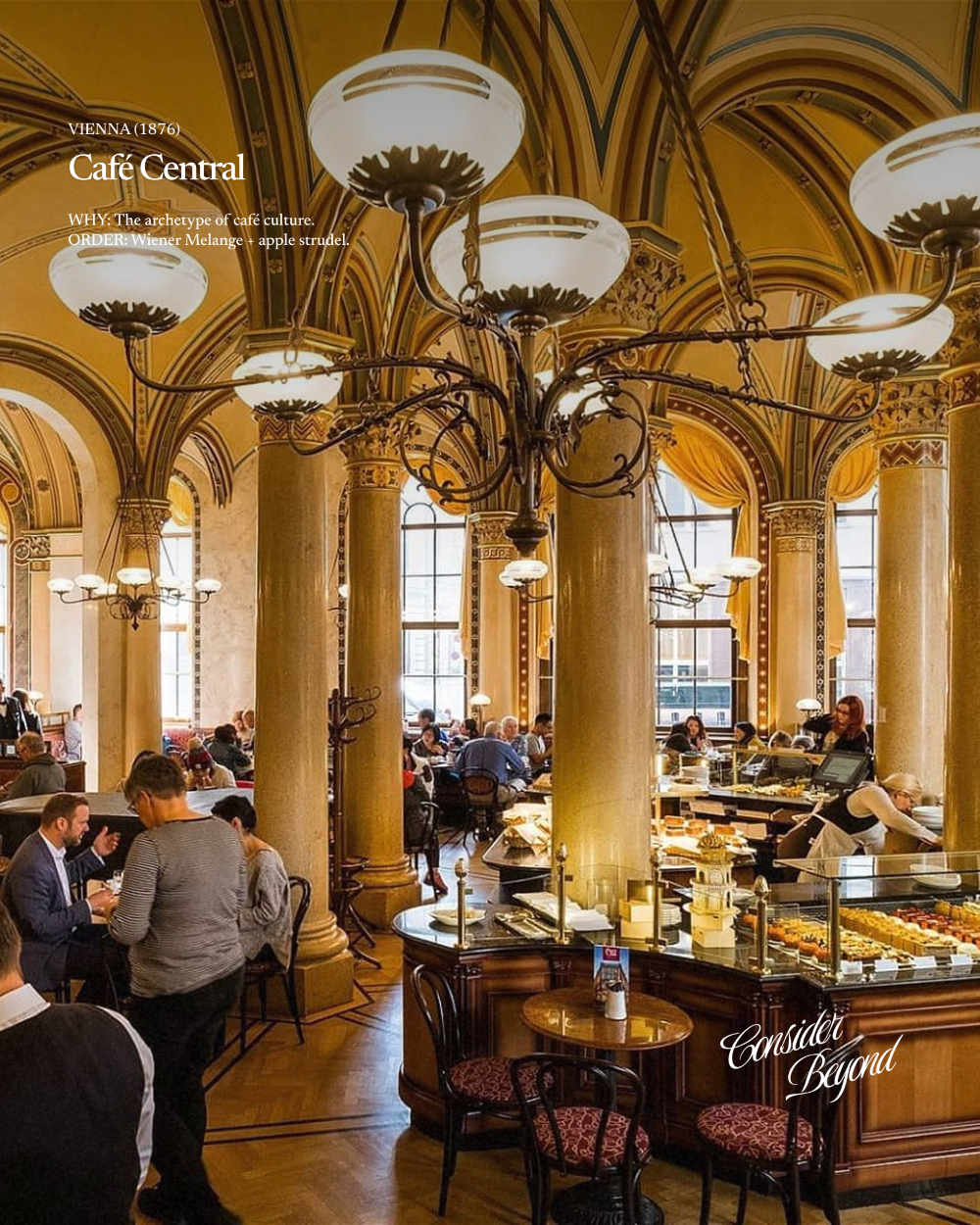
If there is an archetype of café culture, Café Central may be it. High ceilings, columns, newspapers on holders—everything suggests you are meant to sit longer than planned.
Vienna’s café tradition wasn’t designed for efficiency; it was designed for thought. Central remains a reminder that lingering can still be legitimate.
Why: The archetype of café culture.
Order: Wiener Melange + apple strudel.
07. Café de Flore
Paris (born 1887)
Address: 172 Boulevard Saint-Germain, 75006 Paris, France (Google Map)
Café de Flore occupies a corner of Saint-Germain-des-Prés where ideas once spilled as freely as coffee. Its terrace remains a small theatre of the street—existentialism turned outward, conversation made visible.
What allows Flore to endure is not mythology alone, but repetition. The chairs remain. The rhythm holds. People still come not to rush, but to observe—others, themselves, the city.
Why: Existentialist street theatre.
Order: Café crème; sit outside and watch.

08. Café Procope
Paris (born 1686)
Address: 13 Rue de l’Ancienne Comédie, 75006 Paris, France (Google Map)
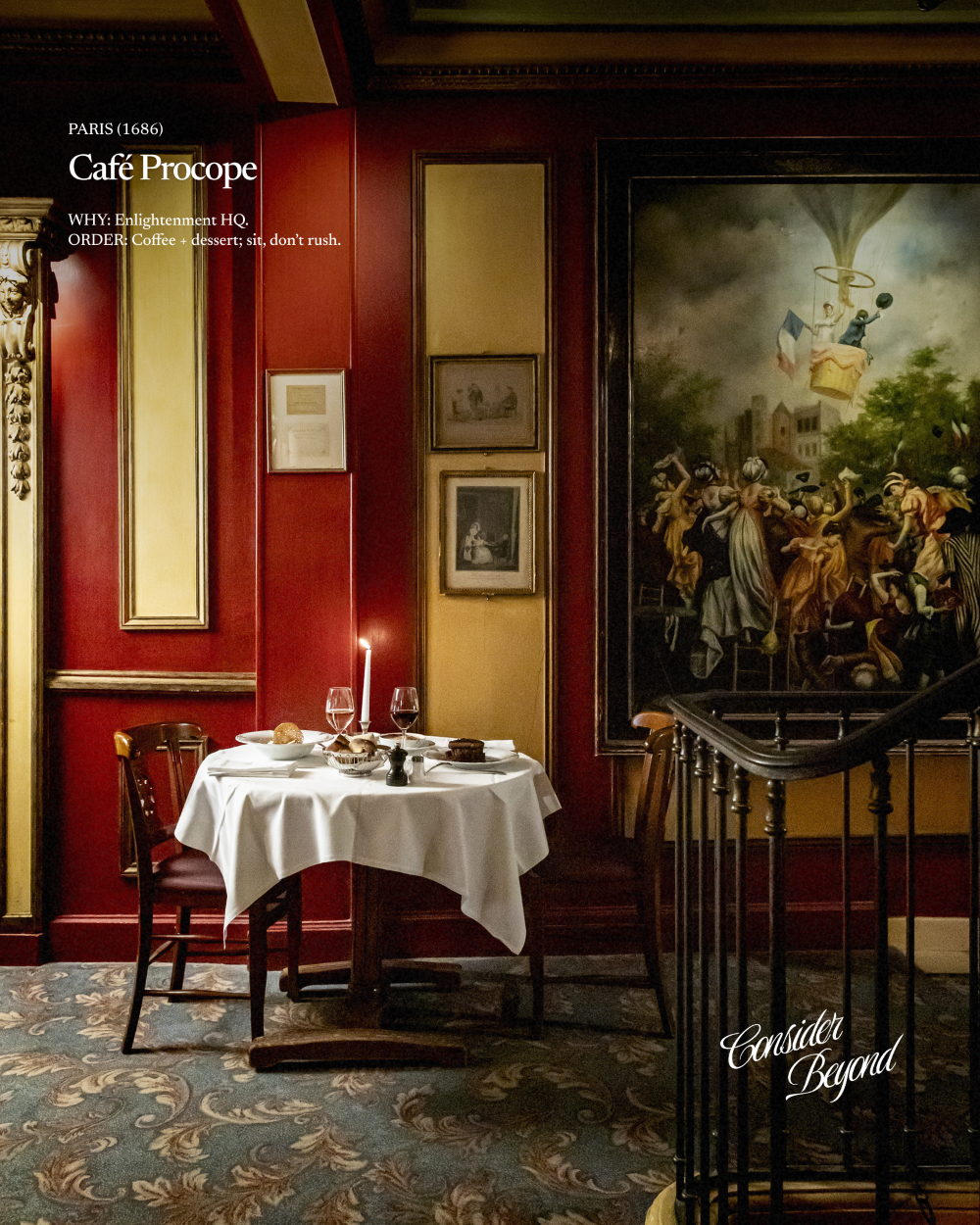
Café Procope predates the idea of the modern café itself. Once the meeting place of Enlightenment thinkers—Voltaire, Rousseau, Diderot—it feels less like a café and more like an interior for thinking slowly.
Its red walls and historic rooms could easily harden into nostalgia, yet Procope survives by inviting guests to stay—not skim history, but sit with it. The pace is deliberate. The atmosphere insists on patience.
Why: Enlightenment headquarters.
Order: Coffee with dessert; sit, don’t rush.
09. Caffè Florian
Venice (born 1720)
Address: P.za San Marco 57, 30124 Venezia VE, Italy (Google Map)
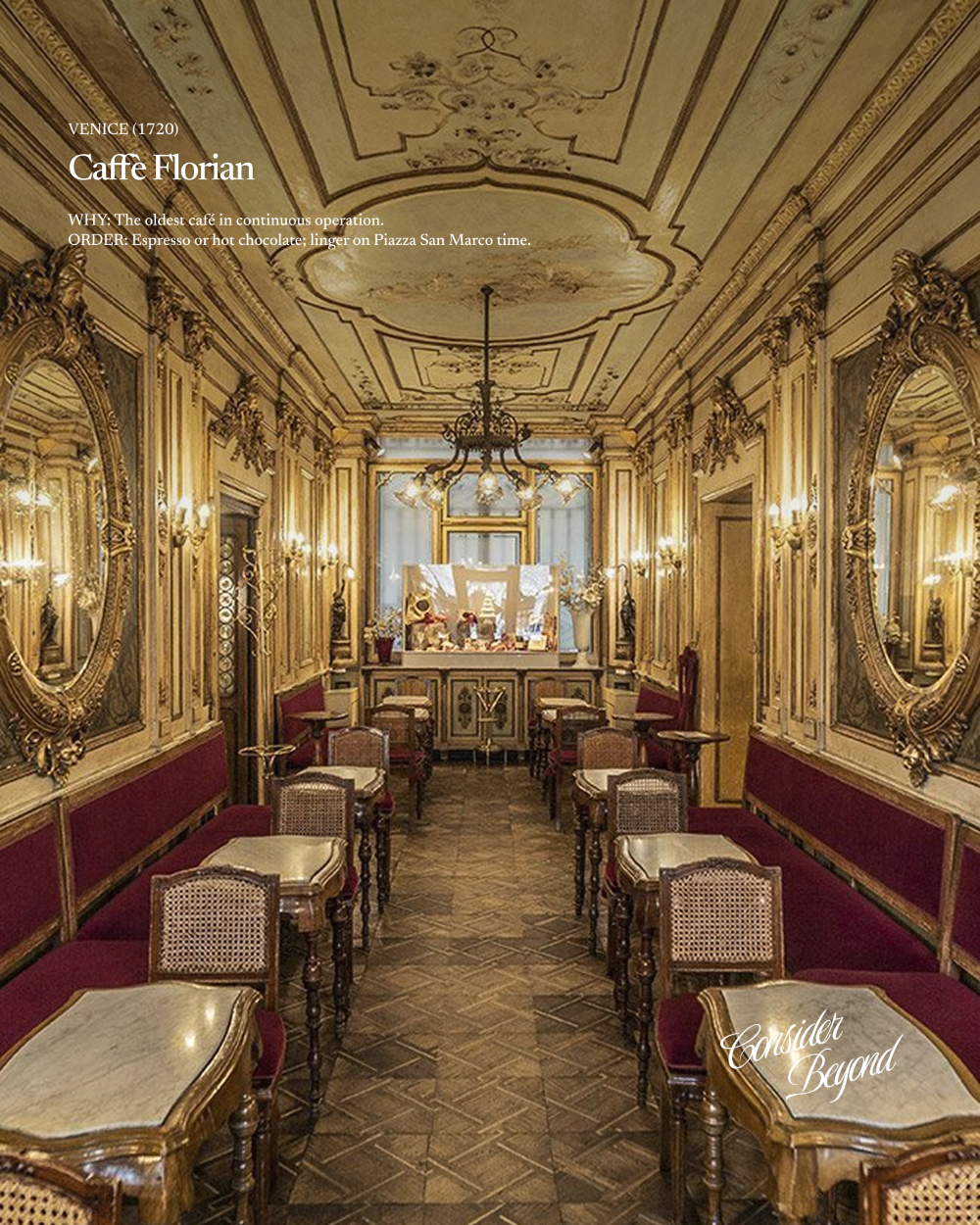
The oldest café in continuous operation, Caffè Florian is less a destination than a witness. In Piazza San Marco, it has lasted through centuries not by chasing novelty, but by understanding presence: you come here to sit inside a long line of sitters.
Yes, it is expensive. But Florian isn’t selling coffee so much as a quiet encounter with continuity itself.
Why: The oldest café in continuous operation.
Order: Espresso or hot chocolate; linger on Piazza San Marco time.
In a world increasingly shaped by speed and interruption, these cafés offer something less visible but more demanding: continuity. Not a refusal of change, but an ability to absorb it—slowly, patiently—without losing their center. Day after day, they practice the same gestures: opening the doors, resetting tables, pouring, serving, listening. What endures is not nostalgia, but care that accumulates.
They remind us that culture is not only created in moments of brilliance; it is sustained through repetition, attention, and the willingness to remain. To sit in a place that has survived centuries is not to look backward—it is to step into a long present, and feel time differently: less as something to be managed, more as something to be held, and shared.